A Precursor to Ontological Difference
Often dismissed as the most disappointing episode in Kant’s philosophy, the doctrine of imagination is in fact the hinge of the entire Post-Kantian trajectory. It is the third term that reappears—uncannily, almost of its own accord—in the gap between categories and appearances, recalling the Platonic “third man” problem whenever an apparent dualism cannot resolve itself. For Hegel, this revealed the need for a new immanence capable of sublating the finite subject into Spirit. For Nietzsche and Bergson, it exposed the fragility of all transcendental philosophy, whether ontological or epistemological, and invited a turn toward life, force, and creative duration. Yet for Heidegger, Kant’s imagination was not a failure to be corrected, nor a weakness to be overcome, but rather a window into a deeper and recurring problematic: that every attempt to resolve the difference between Being and beings collapses into contradiction so long as “Being” is treated ontically—as a highest entity, a ground, a force, or a principle. In Kant’s imagination, Heidegger glimpsed the first, half-concealed stirrings of a more originary question, one that concerns not what the world is, but the finite being for whom a world can appear at all.
Kant’s Two Sketches of the Mind
Can we determine the necessary conditions for the possibility of experience—thereby grounding empiricism while at the same time limiting rationalism to what can be demonstrated through experience? This is the task of the Critique of Pure Reason. Kant’s answer is to construct an account of the mind’s a priori operations that explains how representations are generated from sensible givenness. The Kantian system begins, as it were, with two formal conditions of sensibility—space and time—under which alone appearances can be given. These forms of intuition supply the baseline structure of the manifold of intuition, and may be understood as the conditions of the possibility of appearance as such.
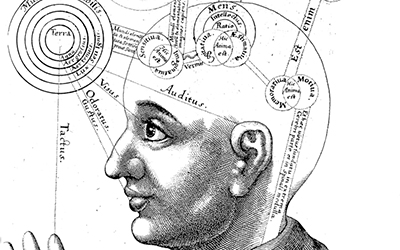
Next, the imagination synthesizes this manifold: it gathers, orders, and temporally unifies it, preparing it for schematization through time-rules that allow the pure concepts of the understanding (the categories) to apply to it. In this way, the manifold is shaped into an object of possible experience. This act of representation is accompanied by the “I think,” the transcendental apperception that unifies all representations in relation to one self-same subject.
In short, Kant’s model describes the unity of intuition—a pre-conceptual field of spatiotemporal givenness—and the unity of concept, the rule-governed structure that confers objectivity. The Critique’s initial draft of the mind is thus a two-sided architecture: intuition providing the manifold ready to receive determination, and the understanding imposing the conceptual form through which alone the given can become an object of experience.
In the second draft of the Critique, Kant reassigns the imagination to a position strictly subordinate to the understanding, indicating his discomfort with the radical possibility suggested by the first draft: that a pre-conceptual, pre-rational synthesis might itself be the generative ground of order in experience. By elevating the understanding above imagination, Kant retreats from the notion that the unity of experience is rooted in finite temporality rather than in conceptual spontaneity. This is exactly what Heidegger seizes on: the early Kant seems to glimpse a mind structured by finite temporality (imagination), while the later Kant retreats to a mind structured by rational spontaneity (understanding). The shift signals Kant’s fear that if imagination were primary, the categories would lose their status as pure, necessary, universal rules and would instead be grounded in the temporal finitude of the human being.